Rules
Plain automation
For the predictable parts. If a rule can do it, we don't pay a language model to have opinions about it.
- Moving data between systems
- Calculations and checks
- Scheduled reports and reminders
- Triggers, routing and hand-offs

AI automation Melbourne
Lumeio finds the expensive, repetitive work hiding in your business, works out which parts rules, AI and people should each handle, then builds the fix. We don't start with AI. We start with how your business actually works.
Nobody ever put "copy numbers from a PDF into Excel" on their dream job list. Let's stop making it part of the job.
Fixed price A$1,950 + GST. Written report in 5 business days. Credited in full if you go ahead.

The short answer
Lumeio is a Melbourne business automation and AI consultancy for teams of 10 to 200 people. We map how a process really runs, price the hours it eats, and decide which steps rules should automate, where AI should read the messy documents and emails, and which decisions must stay with a person. Then we build it into the systems you already use. Every engagement starts with a fixed-price Pain Point Audit, so you see the scope and the cost before anything is built.
The symptoms
If you nod at two of these, you have an automation opportunity. If you nod at all six, you're allowed a small sigh. Then a cup of tea. Then a call.
Someone downloads the same CSV, deletes three columns, fixes the headings and emails it to Dave. Every single week. Congratulations: you've invented a job for a robot.
Customer details typed into the CRM, then the job system, then Xero. Three systems, one very patient human photocopier.
Invoices, dockets, certificates and lab results arrive as PDFs and get retyped field by field, by someone who was hired to do something far more useful.
Requests, approvals and enquiries live in a shared inbox, sorted by whoever opens it first and remembered by nobody.
Sign-offs only move when someone chases them. Your process map is, technically, a series of "just following up" emails.
One spreadsheet runs a critical process and exactly one person understands it. They would like to take annual leave at some point this decade.

None of these tasks feels expensive on its own. Fifteen minutes here, an hour there. The trouble is they repeat, every week, forever, and they sit with your most experienced people because they're the ones who know where everything lives.
Manual handling also adds errors that someone then has to find. Our breakdown of the hidden cost of manual data entry walks through how the real cost stacks up, rework included.
Human tax calculator
Three numbers. No email address required. Pick one task you're tired of watching happen.
Want the full method? Read how to calculate the ROI of AI automation, worked example included.
Find → Prioritise → Automate
We sit with the people who do the work for half a day and follow the documents, emails and spreadsheets to see where the hours go. Not the org chart version of the process. The real one, including the workaround everyone forgot was a workaround.
We decide what rules should automate, where AI genuinely helps, and what stays human. Each opportunity is ranked by hours returned, risk and cost, and you get it in writing within 5 business days.
We build it into the systems you already run, test it with your team and hand over the documentation and the rule set. Then we can run it with you, or step back and let you get on with it.
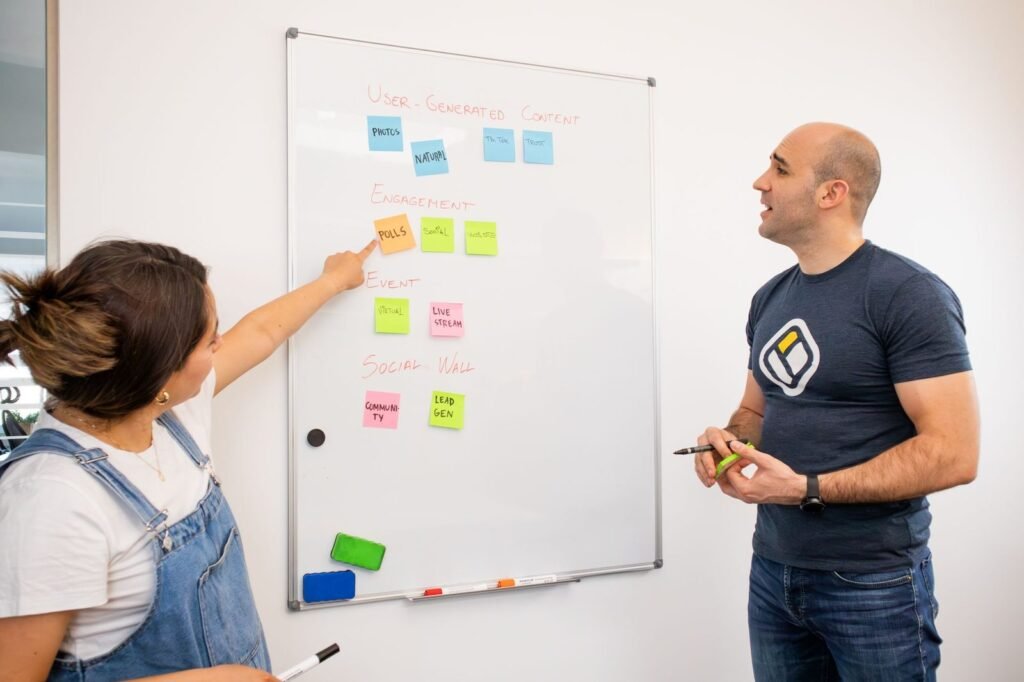
AI is a tool. The business problem comes first.
Most processes need far less AI than the brochures suggest. That's good news for your budget, and better news for whoever has to maintain it.
Rules
For the predictable parts. If a rule can do it, we don't pay a language model to have opinions about it.
AI
For information that arrives unstructured, inside boundaries we set and test.
People
[Switches to serious face] The person who signs is the person who is accountable. Software doesn't change that, and we don't pretend it does.
Go deeper: what human in the loop should actually mean, document AI versus OCR, and when Zapier, Make or n8n is the right call (sometimes it is, and we'll say so).
Before vs after
The easiest way to judge AI automation in Melbourne, or anywhere, is to watch one process before and after. Here's the pattern we build most often.
| Step | Today, done by hand | With Lumeio |
|---|---|---|
| Reading documents | Staff retype fields from PDFs, scans and email attachments. | AI reads each document and pulls out typed fields such as invoice number, docket number or expiry date. |
| Moving the data | Copy and paste between the inbox, a spreadsheet and two other systems. | Rules write each record straight into the systems you already run. |
| Checking the data | Spot checks, when there's time. | Rules check every field against your own business rules, every time. |
| Handling exceptions | Found late, or not at all. | Routed to a named person with approve, reject or return controls. |
| Reporting | Rebuilt by hand every Monday, then emailed to Dave. | Generated on schedule. Dave gets it before his coffee. |
| Finding the evidence | Searching inboxes and shared drives when an auditor asks. | Each value links back to the document it came from. |
| Accountability | Whoever last touched the spreadsheet. | Stays with your team. A person signs off what the rules can't settle. |
Want this mapped for your own process? Book a Pain Point Audit.
AI automation Melbourne services
Each one is scoped from what the audit finds, never from a product we're trying to sell. See all of our business automation solutions.
A fixed-price, half-day look at how work really moves through your business. Ranked opportunities, estimated hours and a fixed quote for the first fix, in writing.
See what the audit covers DocumentsTurns PDFs, dockets, scans and forms into checked, structured data, with every value traceable to its source page.
Explore document intelligence WorkflowsMoves information between the systems you already use: approvals, recurring reports, supplier invoices and hand-offs.
Explore workflow automation DecisionsGathers what a decision needs from email, documents and data, then hands it to the person who makes the call.
Explore AI decision systemsWhere we work
AI automation in Melbourne earns its keep where documents are heavy and mistakes are expensive. Different regulators, same problem: information arrives messy and has to leave clean. See all industries.

Weighbridge dockets and waste transport records turned into a register that lines up with your general environmental duty.
Use case: waste records automation

ITPs, SWMS, site diaries, supplier invoices and delivery dockets pulled into one register instead of six folders and a ute.
Use case: supplier invoice and docket extraction

Permit applications, mandatory notification stages and occupancy records, built around the Building Act 1993.
Use case: building permit data extraction

Progress notes, SIRS incident records and worker screening pulled into an evidence pack against the Aged Care Quality Standards, so carers can get back to caring.
Use case: aged care evidence pack

Client records, AML/CTF checks, workpapers and supplier invoices, without the shoebox of receipts. Well, with fewer shoeboxes.
Not on the list?
We've also mapped service desk ticket triage, inventory reordering and CV reformatting for recruiters.
See the thinking before you hire it
We take one painfully familiar process, put it on the table, and work out what it really costs and what we would change. Gloves on. No jargon.

Melbourne based, Australia wide
Lumeio is a Melbourne AI automation consultancy working with businesses across Victoria and Australia. It was founded by Jumei Lin, whose background is engineering and the building industry, including a role as Engineering Manager at a building surveying firm. That's why our builds start from how compliance work actually runs, not from a software demo.
Your documents stay inside the environment agreed in the audit report, and builds are designed against the Australian Privacy Principles. If you're working out your own AI governance, the Australian Government's Voluntary AI Safety Standard is a sensible, plain-English place to start.
How we engage
Three stages. You can stop after any of them, and the audit report is yours to keep either way.
1. Pain Point Audit
A$1,950 + GST
Fixed price. Credited in full against a first build of A$5,000 + GST or more, signed within 60 days of your report.
2. Build
Scoped in the audit
Fixed scope and fixed price, agreed from what the audit found. No surprises in month three.
3. Operate
Ongoing, if you want it
We keep it running, tuned and documented, so it keeps working when your rules change.
Not sure an audit is the right first step? Book a 30-minute fit call. It's free, and we'll tell you honestly if we're not the right people.
Questions we get asked
Straight answers. If yours isn't here, the form at the bottom goes to a real person.
An AI automation agency in Melbourne builds software that runs a repetitive, document-heavy process end to end, with a person checking the parts that need judgement. For Lumeio that means finding the work that shouldn't be manual, deciding which steps rules, AI or people should own, and building it into the systems you already run. Most of the value sits in the checking, not the reading. Anyone can get a model to read a PDF. Getting it to admit when it's unsure is the hard part.
AI automation in Melbourne with Lumeio starts with a fixed-price Pain Point Audit (A$1,950 + GST), so the scope and cost of any further work is clear before you commit to a larger build. The audit fee is credited in full against a first build of A$5,000 + GST or more, signed within 60 days of the report. Builds are then quoted at a fixed price from what the audit found.
Automation follows rules you can write down: move this field, run this calculation, send this report every Monday. AI handles information that doesn't follow neat rules, such as reading a scanned invoice, classifying an email or summarising a long document. Most good builds are mostly rules with a little AI where the inputs are messy, and a person on the decisions that matter. We use AI only where it earns its place.
Lumeio's AI automation in Melbourne serves five regulated, document-heavy industries, with clients across Australia: waste and EPA compliance, construction, building surveying, aged care and accounting. The same approach also suits other information-heavy businesses with 10 to 200 staff, such as professional services, property, logistics and recruitment.
That isn't the goal. We remove people from the parts of a process where they add no value, like retyping, copying and chasing, so they can spend that time on the work that needs them. Lumeio's systems keep a human in the loop by design: software structures and checks the data, and people keep oversight and final judgement.
Yes, and integration is usually the job rather than an afterthought. We write into the tools you already use, whether that's a compliance register, practice management software, Xero or another finance system, so nobody has to rekey anything. If a system has no usable API, we tell you during the audit rather than three months into a build.
Both, and we'll tell you which one your problem deserves. If an off-the-shelf tool covers most of what you need, custom development is an expensive way to buy the rest. We build custom software when your rules, document formats or audit obligations don't fit anything on the shelf, which in regulated industries happens more often than vendors like to admit.
Often, but only when the process is repetitive and the volume is real. Automation pays off when someone spends hours a week on work that follows a rule. It doesn't when every task is genuinely different. The Pain Point Audit exists to find out which one you have before you pay for a build.
Your documents stay inside the environment agreed in the audit report, and builds are designed against the Australian Privacy Principles rather than having privacy retrofitted at the end. We don't train public models on your records. Access, retention and deletion are written into the build plan, so you can show a regulator exactly where a record lives.
The Pain Point Audit takes half a day of your team's time, and the written report follows within 5 business days. The build is scoped and costed from what the audit found, so the timeline is agreed up front rather than estimated optimistically and quietly revised later.
Find → Prioritise → Automate
Lumeio finds it, figures out what should be automated, and builds the solution. Start with a fixed-price Pain Point Audit and see the scope and the cost before anything is built.
Or email jumei@lumeio.com.au. Dave will be fine. We'll find him something more interesting to do.
Still have questions?
Tell us what the manual work looks like today. We'll tell you what a Pain Point Audit would cover.
Photos: Tima Miroshnichenko, cottonbro studio, Ivan, RDNE Stock project, ThisIsEngineering, Jsme MILA, Karola G and Walls.io via Pexels (Pexels Licence). Melbourne skyline by lokesh, Wikimedia Commons, CC BY 2.0.