
Building surveying

AI automation for building surveying in Melbourne

Building surveying compliance automation reads the permit applications, notifications and certificates your practice already receives. It checks them against the rules that govern them. Then it keeps a register you can actually search. The statutory decisions stay where the Building Act 1993 puts them, with the relevant building surveyor.

Fixed-price discovery. You see the scope and the cost before anything gets built.

  • Private building surveyors
  • Municipal building surveyors
  • Melbourne, Victoria

Talk to a human in Melbourne

Get your permit paperwork looked at

Tell us what your permit files, notifications and certificates look like today. We will tell you straight whether we can help.

    A real person reads every enquiry.

    The short version

    Building surveying compliance automation, in plain English

    Building surveying compliance automation is software that does the repeatable half of a surveying practice. It reads permit applications, stage notifications and certificates, pulls out the details that matter, checks them against your rules, and sends anything doubtful to a named person.

    Built for private and municipal building surveyors in Melbourne and across Victoria, working under the Building Act 1993, the Building Regulations 2018 and the National Construction Code.

    What it does

    • Reads every document, however it arrives
    • Checks each field against the rule that governs it
    • Keeps one register you can actually search

    What it never does

    • Issue a building permit or an occupancy permit
    • Accept or reject work at a mandatory stage
    • Stand in for an inspection in person

    The actual problem

    Nobody sat seven years of registration to become a document controller

    Ask a building surveyor what the job is. You'll hear about fire safety, egress, performance solutions and the weight of a statutory decision.

    Then ask what last Tuesday actually contained.

    [Switches to serious face] A missing structural certificate. A form lodged against Rev C when the permit was issued against Rev E. And a builder who notified a mandatory stage by text message at 6.41pm.

    The judgment is the valuable part. The chasing isn't. We aim at the chasing, and deliberately nowhere near the judgment.

    In Rev C's defence

    Rev C never meant any harm. It was the current drawing once. Then Rev D happened, then Rev E, and nobody told the person holding the nail gun.

    Rev C is eternal. Somewhere in Melbourne, right now, someone is building from a superseded drawing and feeling great about it. We can't stop that. We can make it obvious within the hour, instead of at final inspection.

    Three people reviewing rolled building plans around a table with a hard hat, calculator and laptop, the plan assessment work that stays with the building surveyor

    Structural certificateExpired in March. Found in September.

    Drawing revisionRev C. The permit says Rev E.

    Frame stageNotified by text at 6.41pm

    What we automate

    Six document flows building surveying compliance automation is built for

    These are the six places a practice loses time to paper instead of thinking. Each one is a build we've scoped with Victorian practices.

    01

    Building permit applications

    An application arrives as a zip of PDFs, a Dropbox link and an email holding three important sentences. The completeness check runs the moment it lands, so the applicant hears what's missing on day one, not day nine.

    02

    Mandatory notification stages

    Builders notify by email, text and phone call. Tied to the permit, each notification lands on a live schedule instead of a memory test.

    03

    Inspection records

    Photos, handwritten notes and a tablet form filled in the rain. Each becomes a record tied to the stage, the permit and the date. The inspection itself still happens in person.

    04

    Certificates and design documents

    Structural, fire safety, energy efficiency, waterproofing. Each has an author, a scope, a date and often an expiry. As data, an expiry is a warning. As a PDF in a folder, it's a surprise.

    05

    Occupancy permits and final certificates

    The last mile is an evidence problem. Everything you need was received at some point, by somebody. The set gets assembled as it arrives, so final is a review, not archaeology.

    06

    Council reporting

    Records of inspection go to the relevant council. The Regulations set out what each one must contain, as the BPC's practice note MI 01 explains. With a dated register, producing them is a query, not a lost afternoon.

    New dwelling permitPermit schedule

    1 stage waiting
    1. Pre-slabInspected
    2. FrameNotified by text, logged
    3. Certificates for final2 of 5 received
    4. FinalNot yet
    Illustrative example of one permit's schedule in the register

    And yes, it flags Rev C. Every single time. Rev C has stopped taking it personally.
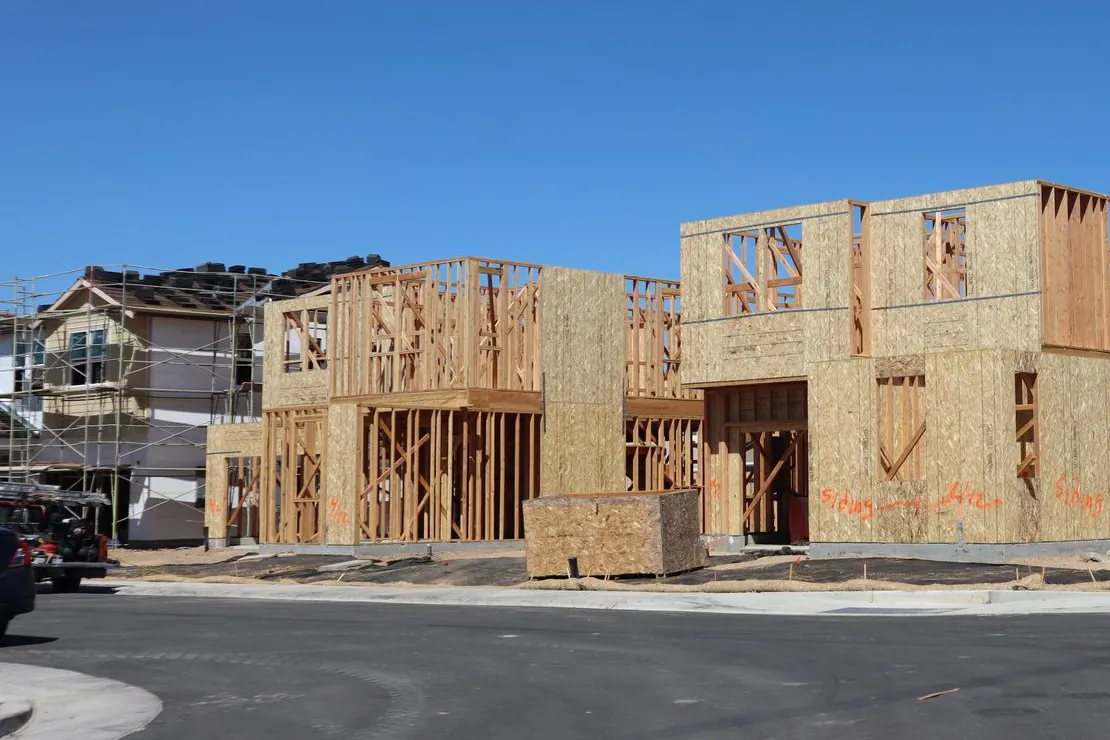
    Timber house frames under construction beside scaffolding on a new residential estate, the frame stage that mandatory notification tracking follows
    Every stage on the permit gets a line on the schedule. Even the ones notified by text.

    Before and after

    The same statutory decisions, minus the archaeology

    Nothing here changes what you assess or who signs it. It changes how long it takes to find what you need.

    BeforePERMIT_REGISTER_2026_FINAL_v4_ACTUAL.xlsx, with three people certain they hold the current copy.

    AfterOne register, one current version, every change attributed and timestamped.

    BeforeA mandatory stage notified by text message that nobody wrote down.

    AfterNotifications captured and tied to the permit and the stage, whatever channel they came in on.

    BeforeA structural certificate that expired in March, found in September.

    AfterExpiry dates tracked as data, so the warning arrives before the inspection does.

    BeforeRev C assessed against a permit issued for Rev E.

    AfterDrawing revisions compared automatically, with a mismatch flagged instead of assumed.

    BeforeOccupancy permit evidence pulled together in the last fortnight by whoever could least afford the time.

    AfterThe evidence set built up as you go, so final is a review.

    Send us one awkward permit file. We'll show you what its after looks like.

    Book a Pain Point Audit

    How it works

    What a build actually involves

    This isn't a platform you migrate to. It reads what your practice already receives and gives back something you can defend. Five stages, and the first one isn't software.

    1. 01

      Discovery

      Fixed price. We map the document flows you actually run, then write down what could be automated, what shouldn't be, and what it costs. You keep the output either way.

    2. 02

      Extraction

      Scans, phone photos, PDFs, email attachments, forms filled in on site in poor light. Fields come out typed, not as a wall of text.

    3. 03

      Validation

      Dates in sequence, revision against permit, certificate still current, signature present. If a rule can't be checked, the record is flagged, never assumed.

    4. 04

      Escalation

      Anything ambiguous goes to a named person with the source attached. In statutory work a confident wrong answer is worse than no answer.

    5. 05

      Register

      Searchable, ordered and exportable. Every value links back to the page it came from.

    Certificate record

    Expires in 21 days
    Document
    Structural certificate, scanned PDF
    Drawings
    Rev E, matches the permit
    Source
    Page 2 of the original scan
    Rule
    Must be current at final inspection
    Next step
    Renewal request sent to the builder
    Checked against 4 rulesNo guesses
    Illustrative example of one record in the register

    The step where a person decides has a name. It's called human in the loop, and it's the part we take most seriously.

    Building inspector in a hard hat and hi-vis vest kneeling at a doorway with a clipboard, recording an inspection that building surveying compliance automation turns into a dated record
    The inspection still happens in person. The paperwork afterwards stops eating the evening.

    What you get

    From permit paperwork to a register you can defend

    Three promises we build to, and six outputs every build ends with, whatever mess it started from.

    Validation

    Nothing reaches your register without passing the rules that govern it. If a rule can't be checked, the record is flagged, never assumed.

    Traceability

    Every value stays linked to its source page or photo. When a council or a court asks where a figure came from, the answer is one click away.

    Oversight

    A person signs off. The software structures and validates. Judgment and accountability stay with your registered practitioners.

    Structured register

    Searchable, not a filing cabinet.

    Validation trail

    Rule by rule, for every field.

    Source linking

    Every value traces back to its page.

    Exception queue

    Doubtful records go to a person.

    Reviewer sign-off

    Named and timestamped.

    System export

    Into the tools you already run.

    Notably absent from this list, Rev C. We checked twice.

    The framework

    The rules we write validation against

    Validation rules are only worth having if they match the framework you answer to. Here's ours, including the part that changed recently.

    New name, bigger remit

    1 Jul 2025

    The day the Building and Plumbing Commission began operations.

    The BPC brings together the functions of the Victorian Building Authority, Domestic Building Dispute Resolution Victoria and the domestic building insurance arm of the VMIA.

    Legally it's still the Victorian Building Authority, now trading as the BPC. The Building Legislation Amendment (Buyer Protections) Act 2025 moved dispute resolution and domestic building insurance into it.

    Plenty of material still says VBA, and legally that isn't wrong. But software that checks your obligations should know the regulator you actually deal with.

    The Act

    The Building Act 1993 sets the role, powers and accountability of the relevant building surveyor. Section 34 requires an inspection at each mandatory notification stage.

    The Regulations

    The Building Regulations 2018 carry the operational detail. That includes the prescribed notification stages and what a record of inspection must contain.

    The technical standard

    The National Construction Code is the benchmark you assess against. Automation doesn't interpret it. It makes sure the documents you need are present, current and attached to the right revision.

    Mandatory notification stages

    The stages are prescribed across four regulations. When assessing the permit, the relevant building surveyor works out which stages apply and lists them on the permit.

    That's how the BPC's practice note MI 01 (version 2.0, published 24 December 2025) explains it.

    1. Regulation167New buildings and alterations
    2. Regulation168Demolition or removal
    3. Regulation169Swimming pools and spas
    4. Regulation172Extra inspections for Class 2, 3, 4, 9a and 9c parts

    Software shouldn't decide any of this. It should track it, timestamp it and route it to the person accountable.

    Two building professionals in hard hats on site, one pointing up at formwork, the kind of in-person inspection that automation must never replace
    Inspections happen on site, in person. That part stays human.

    The line we don't cross

    What automation must never touch

    This is the shortest section on the page and the most important one.

    Automation earns trust by where it stops, not by what it claims.

    The inspection itself

    Section 34 requires mandatory stage inspections in person. MI 01 is blunt about it. Photos, drones, video and declarations can support an inspection. They can't replace one.

    The statutory decision

    Issuing a building permit, accepting work at a mandatory stage and issuing an occupancy permit sit with a registered building surveyor. That accountability is personal. No extraction accuracy transfers it.

    The judgment call

    Performance solutions, fire engineering and the genuinely contested edge cases. That's where experience earns its money, and where we stay well out of the way.

    We've written more about where building surveyor automation helps and where it must stop, because the boundary matters more than the capability.

    Questions

    Frequently asked questions

    The ones we hear most from Melbourne practices. If yours isn't here, ask us and a real person will answer it.

    What is building surveying compliance automation?

    Building surveying compliance automation is software that handles the repeatable half of a surveying practice. It reads incoming permit applications, notifications, inspection records and certificates, pulls out the fields that matter, checks those fields against the rules that govern them, sends anything uncertain to a person, and keeps a structured register. It does not make statutory decisions. Issuing permits and accepting mandatory notification stages stay with the registered building surveyor.

    Does this replace a registered building surveyor?

    No, and it legally cannot. The Building Act 1993 places the statutory decision with the relevant building surveyor, and that carries personal accountability no software can hold. Mandatory stage inspections also have to happen in person. What automation removes is the reading, keying, chasing and cross-checking around the decision. The decision itself, and the judgment behind it, stay with your registered practitioners.

    Will it work with the documents we actually receive?

    That is the design brief. Phone photographs of signed forms, scanned PDFs, drawings submitted at the wrong revision, and information buried in the body of an email are all normal inputs. During discovery we deliberately ask for your worst examples instead of your clean ones, so you see the failure modes before you commit to anything.

    How does it handle mandatory notification stages?

    The Building Regulations 2018 prescribe the stages, and the relevant building surveyor lists the ones that apply on the permit. Notifications arrive by whatever channel the builder prefers. The system captures each one, ties it to the correct permit and stage, and keeps the schedule, so a missed or out-of-sequence notification shows up immediately instead of at final inspection. The inspection itself still happens in person.

    What happens when the system is not sure?

    It says so. Any record that cannot be validated against its rule is flagged and sent to a named person with the source document attached, instead of quietly filled in with a best guess. In statutory work a confident wrong answer is a lot more dangerous than an admitted gap, so the system is built to escalate instead of assume.

    Next step

    Send us the worst document in your permit file

    The form photographed at dusk. The certificate with a signature across three fields. We'll tell you what we could pull out of it, what we couldn't, and what it would take. No slides.

    • Fixed-price discovery
    • You keep the output
    • A real person replies

    PS. If it's drawn at Rev C, we'll spot it. Rev C knows what it did.