
Waste & EPA compliance in Melbourne, Victoria

AI-Powered Waste & EPA Compliance Document Processing

AI automation for waste management Melbourne operators can actually use. Your weighbridge dockets, waste transport records and subcontractor emails are currently held together by one very tired spreadsheet and the memory of whoever happens to be on leave. Lumeio turns that pile into a register you would be happy to hand an EPA officer without first saying “give me a minute”.

Talk to a human in Melbourne

Get your compliance queue looked at

Tell us what your waste paperwork looks like today and we will tell you straight whether we can help.

    A real person reads every enquiry.

    Melbourne

    A local team working to Victorian regulation, in the same time zone as the auditor asking the question.

    Your ruleset

    Built against your waste codes, sites and approved receiving facilities, not a generic compliance template.

    Every field

    Each extracted value keeps the source document, the page it came from and the time it was captured.

    Humans decide

    Anything the system is not confident about is flagged to a named person. Nothing is quietly guessed.

    The current system

    Your compliance evidence lives in a shoebox with ambition

    Let us be honest about the current setup. There is a spreadsheet. It has a name along the lines of WASTE_TRACKING_v4_FINAL_USE_THIS_ONE.xlsx, which is the file-naming equivalent of shouting.

    Beside it sits an inbox where weighbridge dockets arrive as phone photos taken at an angle suggesting the photographer was being chased.

    [Switches to serious face] None of this is a competence problem. It is a volume problem.

    A mid-sized Melbourne operator can move waste across a dozen sites in a single week. Every one of those movements produces paper that somebody has to read, classify correctly and file somewhere findable.

    Doing that by hand is a bit like sorting a swimming pool of Lego by colour, using tweezers, while a colleague reads the Environment Protection Act 2017 aloud at you. Technically possible. Not a plan.

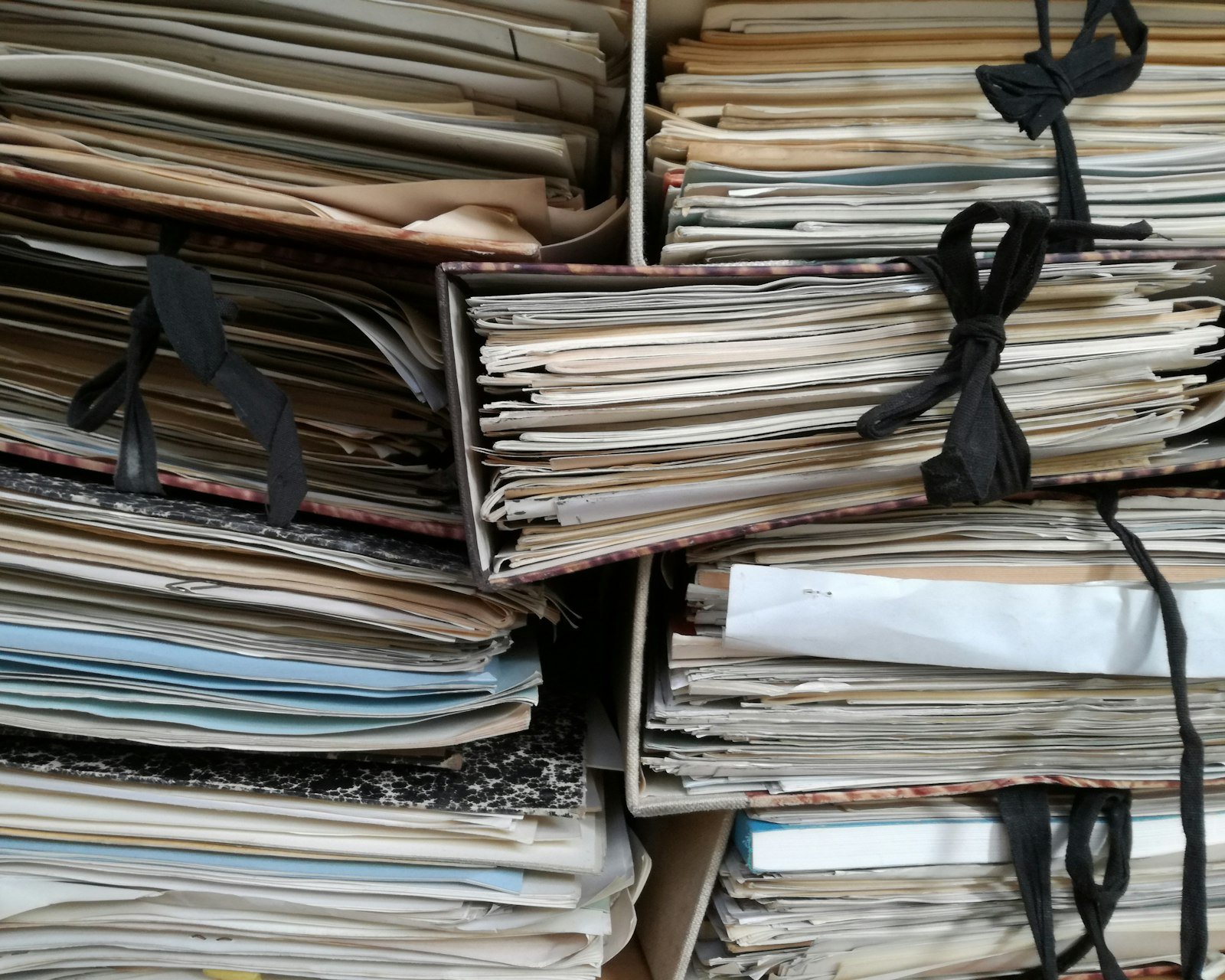
    Bundles of tied paper waste records stacked in an archive
    Five years of evidence, filed by hand

    Where it breaks

    Four places waste paperwork quietly fails an audit

    These are the four failures we see most often when we open up a Victorian waste operator’s records. None of them are dramatic, and that is the problem. They are all quiet right up until the moment somebody asks for evidence.

    01

    The record exists, the timing does not

    A spreadsheet row can be edited at any time, by anyone, and it retains no evidence of when the entry was made or who made it. When you are asked to demonstrate that a record was created before the waste moved, a date typed into a cell is not proof of anything.
    02

    Dockets that never become data

    Weighbridge dockets, transport certificates and receiver confirmations arrive as PDFs, photos and email attachments. Until someone keys them in, they are not a register. They are an inbox with good intentions.

    03

    Classification drift

    The same waste stream gets described three different ways by three different people over a year. Reporting built on that is estimation, and inconsistency between your own records is precisely what a reviewer notices first.

    04

    Subcontractor blind spots

    EPA Victoria is explicit that you remain accountable for information entered into Waste Tracker on your behalf, including by a transporter or accredited consigner. If you cannot see what was recorded, you are carrying a risk you cannot measure.

    The build

    What AI automation for waste management actually does here

    No chatbot. No dashboard you will open twice and then never again. AI automation for waste management Melbourne means a document pipeline that does the reading, the part of compliance that is pure volume and zero judgement.

    Step 01

    Ingest

    Dockets, manifests, invoices and contractor emails land in one place, however they turn up. Scanned, photographed, forwarded at 6am, or attached to a message that says only “see attached”.

    Step 02

    Extract

    Each document is read into structured fields. Waste code, tonnage, site, transporter, date, receiving facility. Every value keeps a pointer back to the page it came from.

    Step 03

    Validate

    Fields are checked against your own ruleset. Permitted codes for that site, expected tonnage ranges, required signatures, and the facilities that stream is actually approved to go to.

    Step 04

    Route

    Clean records post straight into your register. Anything uncertain is flagged to a named person with the source document open beside the question, so the decision is made by a human who can see the evidence.

    • Timestamped, attributed entries, so “when was this recorded” has an answer that is not a shrug.
    • One consistent classification per waste stream, applied the same way every time.
    • Exception queues instead of blanket re-checking, so review effort goes where the risk is.
    • Exports shaped for the register you already report from, not a format nobody asked for.

    Before and after

    What changes on an ordinary Tuesday

    Compliance software is usually sold on audit day, but audit day is not the problem. The problem is the ninety ordinary days before it, where the record either kept up or quietly did not. Here is what changes about those ordinary days.

    The same Tuesday, before and after
    What happensSpreadsheet and inboxWith the pipeline running
    A docket arrivesSits in an inbox until someone has a quiet half hour. Nobody has ever had a quiet half hour.Read, extracted and validated on arrival; in the register before the truck is back.
    “Where is the record for site 4?”Three people search three folders. Two find different versions.One search returns the record and the source document behind it.
    A waste code is wrongDiscovered at reporting time, if at all, usually by the person least able to fix it.Caught at validation against the permitted codes for that site, and flagged same day.
    An information request landsA fortnight of reconstruction and a great deal of apologising.Filter the period, export the register, attach the evidence trail.
    Month-end reportingA long evening, a pivot table and a level of confidence best described as brave.The register is already current, because it was never allowed to fall behind.
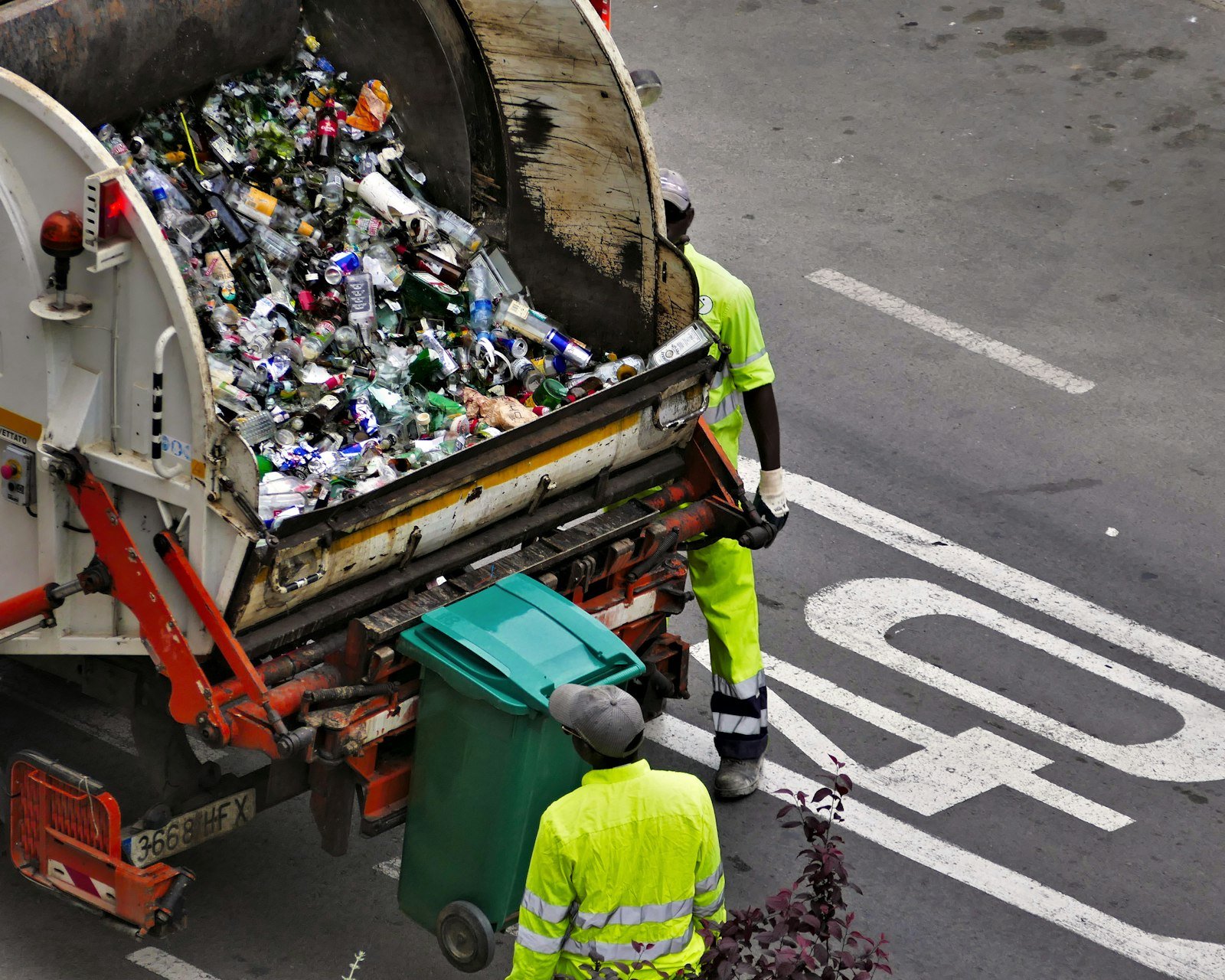
    Waste collection worker in high-visibility clothing loading a bin into a kerbside collection truck in Melbourne
    Collection, transfer, receipt. Every hand-off is a record

    Victorian rules, specifically

    Built for Victorian waste regulation, not a generic template

    Victoria’s waste rules are not the same as New South Wales’ or Queensland’s. A compliance tool built for “waste” in the abstract tends to discover this at the worst possible moment.

    Two obligations shape almost everything we build here. The first is the general environmental duty under the Environment Protection Act 2017, which requires you to eliminate or reduce risks of harm from waste and pollution so far as reasonably practicable. It applies whether or not you hold a permission, and it is judged on what you actually did.

    The second is Waste Tracker, EPA Victoria’s electronic system for reportable priority waste. Producers create a record before the waste is transported, drivers record pick-up and drop-off, and receivers update the record on delivery, with the required information set out in the Environment Protection Regulations 2021.

    So your obligations are continuous and evidentiary. You are not asked to be tidy once a year. You are asked to be able to show what you knew, when you knew it, and what you did about it.

    That is exactly the kind of work a document pipeline is good at and a spreadsheet is not. We wrote about this failure mode in detail in our piece on what audit-ready really looks like under the general environmental duty.

    How an engagement runs

    Three stages, and the first one is free to sanity-check

    We would rather prove this works on your documents than describe it on ours. The first stage exists so you can find out whether it works on your paperwork before anyone signs anything.

    Week 1

    Send us your messiest documents

    Not your cleanest. Your worst. The crumpled docket, the photo taken in the rain, the email chain with the real answer buried in the third reply.

    We run them and show you the extraction, field by field.

    Weeks 2 to 4

    We encode your ruleset

    Your waste codes, your sites, your approved receiving facilities, your tonnage tolerances and your escalation paths. This is the part that makes the difference, and it is the part a generic tool skips.

    Ongoing

    It runs, you review exceptions

    The pipeline handles the volume. Your team handles the judgement calls, which is a far better use of people who understand waste than typing tonnages into a spreadsheet.

    Questions we get asked

    Frequently asked questions

    Does AI automation for waste management replace our compliance team?

    No, and any vendor promising that should be asked to put it in writing. The pipeline removes the reading, keying and cross-checking, which is the high-volume, low-judgement work. Decisions about risk, classification edge cases and what to escalate stay with your people, who now have time to make them properly.

    Will it work with the documents we actually get, not clean templates?

    That is the whole design brief. Weighbridge dockets photographed on a phone, scanned PDFs, faxed-looking transport certificates, and information buried in the body of an email are all normal inputs. During the first stage we deliberately ask for your worst examples so you can see the failure modes, not just the happy path.

    How does this relate to EPA Victoria’s Waste Tracker?

    Waste Tracker is EPA Victoria’s system of record for reportable priority waste movements. Lumeio sits upstream of it. We turn your incoming documents into validated, structured records so what gets submitted is consistent and traceable, and so you can see what was recorded on your behalf. You remain accountable for that information under EPA’s own guidance.

    Do you only work with waste operators in Melbourne?

    Melbourne and greater Victoria are our focus because the regulatory detail is where the value sits, and Victorian rules are what we know deepest. We also work with aged care providers and building surveyors, who have different regulators and identical paperwork problems.

    What happens when the system is not sure about a document?

    It says so. Low-confidence extractions are flagged rather than guessed, and routed to a named reviewer with the source document displayed alongside the field in question. A compliance system that quietly invents a plausible tonnage is worse than no system, because you would never know to check it.

    How long before it is actually running on our documents?

    A first extraction pass on your real documents typically happens within the first week, because that is the fastest way to find out whether this is worth doing. Encoding your full ruleset, meaning codes, sites, approved facilities, tolerances and escalation paths, is usually a few weeks, depending on how many sites and streams are involved.

    Start with one messy document

    Send us the worst docket you own

    Not a tidy sample. The genuinely awful one. Creased, photographed at dusk, half-legible.

    We will run it and show you exactly what comes out, field by field, along with what we could not read and why. It is the fastest honest answer to whether this helps you.